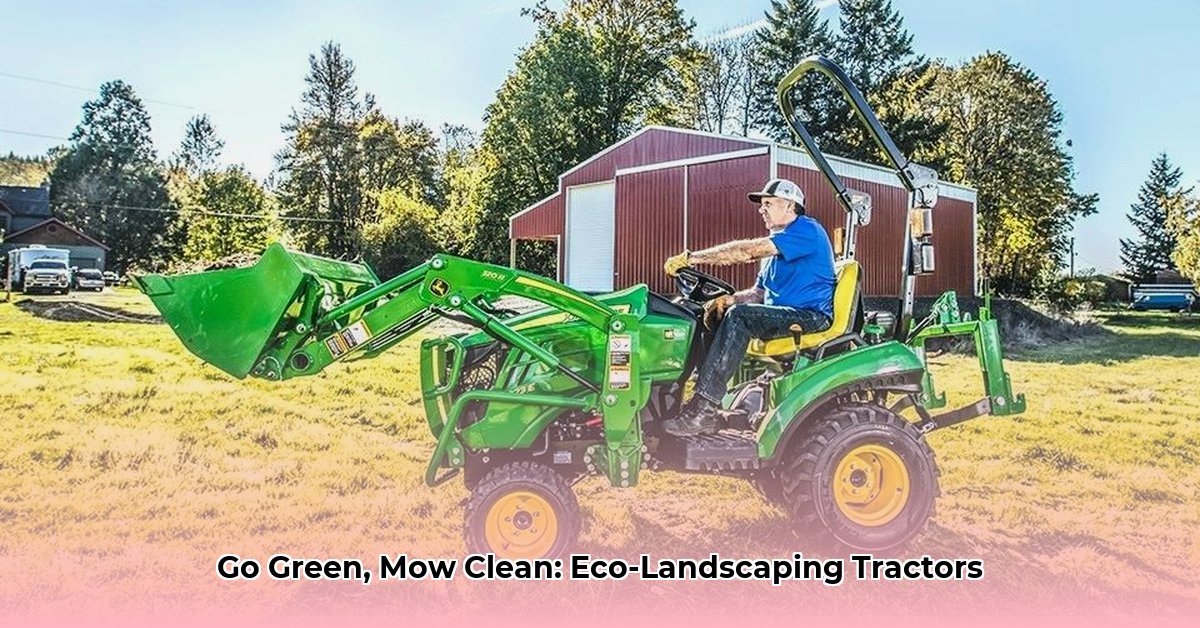
Choosing the right compact tractor for your landscaping or small farm needs careful consideration. This guide provides a step-by-step process to help you find the perfect eco-friendly machine, comparing key features and lifecycle costs to ensure a smart and sustainable investment. For even more eco-friendly options, check out these electric options.
Assessing Your Landscaping Needs: A Foundation for Your Tractor Selection
Before exploring specific tractor models, thoroughly evaluate your property and landscaping tasks. What is the size of your land? What are your primary uses? (Mowing, tilling, hauling materials?) What is your budget? Is your land flat or hilly? Answering these questions helps determine the necessary horsepower, implement compatibility, and overall tractor size. For example, a large estate will require a more powerful tractor than a small suburban lot. Steep slopes demand extra stability and maneuverability, impacting your tractor choice.
Horsepower: Power to Match Your Property Size
Horsepower (HP) is a crucial spec; it determines the tractor's ability to handle various tasks. A larger property demanding heavy-duty work, such as tilling rocky soil or moving significant amounts of material, necessitates a higher horsepower tractor. However, a small yard might only need the power of a lower-horsepower model, saving money on purchase price and potentially fuel costs. Think of it like choosing a car—you wouldn't use a compact car to tow a heavy trailer. Don't overspend on horsepower you won't need! A 20-hp tractor may be ideal for a large lawn, while a 15-hp model might suffice for a smaller property. What horsepower rating would best suit your specific acreage?
Essential Attachments: Expanding Your Tractor's Capabilities
Your tractor's versatility depends heavily on its attachments. Consider these common attachments and their relevance to your landscaping needs:
- Mulching Mower: Essential for efficient and eco-friendly grass and leaf management, reducing the need for bagging and waste disposal.
- Tiller: Prepares garden beds for planting by loosening the soil, increasing aeration and nutrient absorption.
- Front Loader: Ideal for moving topsoil, gravel, or other materials around your property, simplifying landscaping tasks.
- Backhoe: For more demanding tasks like digging post holes or small-scale excavation projects.
A tractor with a wide range of compatible attachments offers maximum versatility and efficiency over the tractor's lifecycle. Remember to align your attachment choices with the specific tasks you anticipate.
Fuel Efficiency: Balancing Performance and Environmental Responsibility
Fuel efficiency is a critical factor affecting both your budget and your environmental footprint. Tractors with hydrostatic transmissions generally provide smoother, more precise control and often exhibit better fuel efficiency compared to gear transmissions. However, gear transmissions can be more durable. How much will fuel savings impact your long-term costs? Before making your final choice, carefully compare the fuel consumption rates of different models, measured in gallons per hour or liters per hour. Lower fuel consumption translates to direct cost savings over the tractor's lifespan, while also reducing your carbon footprint.
Maintenance and Lifespan: A Long-Term Investment
A compact tractor is a significant investment that should last for many years. Therefore, understanding maintenance requirements and the tractor's overall lifespan is key. Consider these factors:
- Ease of Parts Availability: A reliable dealer network, readily available parts, and clear maintenance manuals minimize downtime and repair costs.
- Manufacturer Reputation: Research manufacturers with a strong track record of reliability and build quality. Look at online reviews and consult with other landscapers for insights.
- Maintenance Schedule: Regular maintenance extends the tractor's life. Factor in the cost and frequency of scheduled maintenance (oil changes, filter replacements, etc.).
Investing in a well-maintained, reliable machine will reduce costs and ensure years of service.
Comparing Key Features: A Side-by-Side Look at Tractor Models
Let's compare some key features to illustrate the decision-making process. The table below provides a simplified comparison; you'll need to research particular models for your detailed analysis. Remember to tailor this table with specific models you’re considering.
| Feature | Model A (Example: Kubota BX23S) | Model B (Example: John Deere 1025R) | Considerations |
|---|---|---|---|
| Horsepower | 23 hp | 25 hp | Consider property size; higher HP handles heavier tasks but consumes more fuel. |
| Transmission Type | Hydrostatic | Hydrostatic | Hydrostatic offers smoother control; gear transmissions are often more durable. |
| Cutting Deck Width | 48" | 60" | Choose a cutting deck size that meets the demands of your mowing needs. |
| Fuel Efficiency | Good | Excellent | Fuel efficiency directly impacts operating costs. |
| Price | ~$13,000 | ~$17,000 | Balance initial cost with long-term operating costs. |
| Attachments Available | Many | Extensive | Ensure essential attachments are available and compatible. |
A Step-by-Step Guide to Choosing Your Tractor
- Assess Your Needs: Carefully define your property size, landscaping tasks, and budget.
- Research Tractor Models: Explore models from different manufacturers (Kubota, John Deere, Mahindra, etc.), paying close attention to horsepower, fuel efficiency, and available attachments.
- Read Reviews: Thoroughly research online reviews from other users to gain insights into real-world experiences.
- Test Drive (if possible): If feasible, test drive models to assess handling, comfort, and performance.
- Calculate Lifecycle Costs: Estimate fuel, maintenance, and potential repair costs over the tractor’s lifespan.
- Choose Your Tractor: Select the model that best matches your needs and budget, considering performance, fuel efficiency, and long-term maintenance considerations.
Remember, selecting a landscaping tractor is an investment. Take your time, conduct thorough research, and you'll find the perfect machine to serve your needs efficiently and sustainably for many years to come.